
Working Time
| Monday - Saturday |
08:00 AM - 10:30 PM |
| Sunday | On Appointment |
HYSTEROSCOPY TREATMENT
Advanced Hysteroscopy Care for Better Fertility
Hysteroscopy is a minimally invasive procedure that allows your fertility specialist to examine the inside of the uterus and identify conditions that may affect fertility and pregnancy.
Hysteroscopy Treatment in Hyderabad
Sometimes the reason behind heavy bleeding, repeated miscarriage, difficulty conceiving, or an unusual scan result cannot be understood from an ultrasound alone. In such situations, doctors may need to look directly inside the uterus. That is where hysteroscopy can help.
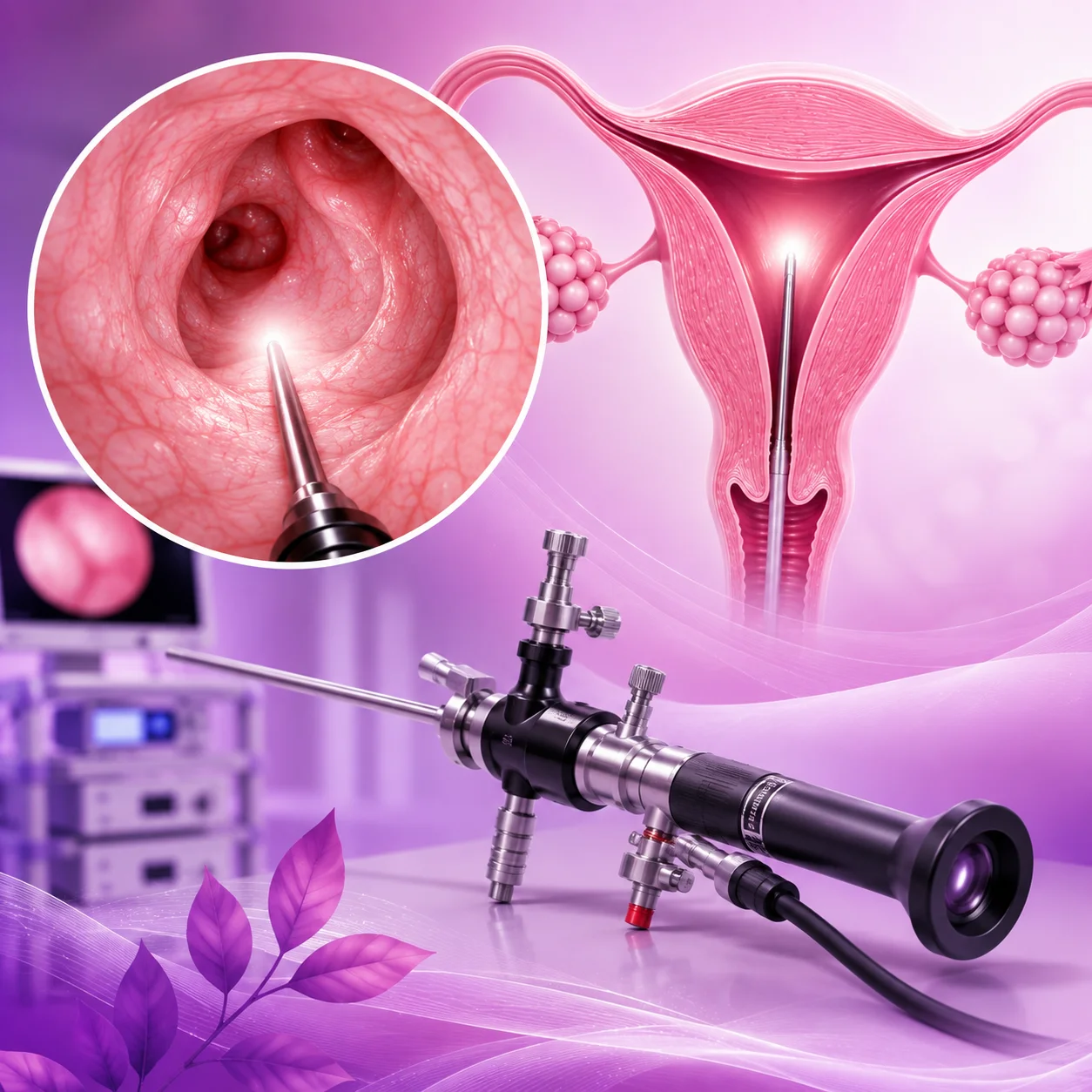
Hysteroscopy is a minimally invasive procedure in which a thin instrument with a camera is passed through the vagina and cervix to examine the inside of the uterus. Depending on what the doctor finds, the same procedure may also be used to take a tissue sample or treat certain problems such as polyps, some fibroids, or scar tissue.
At Aanvi Fertility and Women’s Centre in Tilaknagar, Hyderabad, We provides gynaecological and fertility care for women who may need hysteroscopy as part of their diagnosis or treatment.
Why Would Your Doctor Suggest Hysteroscopy?
Hysteroscopy is not something every woman needs. It is recommended when there is a specific reason to examine the uterine cavity more closely.
A doctor may suggest it if you have unexplained abnormal bleeding, heavy periods, bleeding between periods, or bleeding after menopause. It can also be useful during fertility evaluation when there is a concern about the inside of the uterus, or in some cases of repeated miscarriage.
It may also help identify problems that can sometimes be missed or not fully explained by routine imaging, including:
- Endometrial polyps.
- Certain fibroids that project into the uterine cavity.
- Scar tissue or adhesions inside the uterus.
- Some uterine structural abnormalities.
- Abnormal thickening or other changes that require further evaluation.
The important point is that hysteroscopy is not performed simply because a patient is having difficulty becoming pregnant. Your doctor first considers your symptoms, medical history and other test results to decide whether looking inside the uterus is useful.
Diagnostic Hysteroscopy and Operative Hysteroscopy
There are two basic ways hysteroscopy is used.
Diagnostic hysteroscopy is mainly used to examine the uterine cavity. A small camera allows the doctor to see the inner surface of the uterus directly. If an abnormal area is found, a biopsy or further treatment may sometimes be performed.
Operative hysteroscopy goes one step further. Small instruments can be passed through the hysteroscope to treat certain abnormalities found during the examination. For example, a polyp or some types of fibroid can be removed during hysteroscopic surgery.
What Happens During Hysteroscopy?
Before starting, the doctor will discuss your medical history, the reason for hysteroscopy, the procedure itself and the available pain-relief or anaesthesia options.
A thin hysteroscope is then gently passed through the vagina and cervix into the uterus. A sterile fluid, commonly saline, is introduced to expand the uterine cavity so the doctor can see the walls clearly. A camera at the end of the hysteroscope sends images to a screen.
If the doctor sees a polyp, suitable fibroid, scar tissue or another abnormality that can be treated hysteroscopically, small instruments may be introduced through the hysteroscope.
If a biopsy is needed, a small tissue sample can be collected and sent for laboratory examination.
The procedure itself may take only around 10–15 minutes when it is a straightforward diagnostic hysteroscopy, although it can take longer when treatment or tissue sampling is required.
Is Hysteroscopy Painful?
This is probably one of the first questions most women have. Is hysteroscopy painful?
The answer is: the experience is different for each person.
An outpatient hysteroscopy may feel like period cramps or pressure. Some women tolerate it comfortably, while others may find it quite uncomfortable or painful. Pain-relief and anaesthesia options depend on the type of hysteroscopy, the patient and the facility where it is performed.
If you have previously found pelvic examinations painful, tell your doctor before the procedure. It is reasonable to discuss pain control beforehand rather than simply assuming you have to tolerate discomfort.
For surgical hysteroscopy, the anaesthesia or sedation used will depend on the procedure and your medical circumstances.
What Problems Can Hysteroscopy Treat?
One advantage of hysteroscopy is that it can be both diagnostic and therapeutic.
Depending on the findings and the doctor’s assessment, hysteroscopy may be used to remove:
- Polyps: Small growths from the lining of the uterus that may contribute to abnormal bleeding.
- Certain fibroids: Particularly fibroids that grow into or affect the uterine cavity.
- Adhesions: Bands of scar tissue inside the uterus that can sometimes develop after previous procedures or infections.
- Some uterine abnormalities: Certain structural problems may be evaluated and, in selected cases, corrected hysteroscopically.
Not every fibroid, uterine abnormality or fertility problem can be treated through hysteroscopy. The location and size of the problem matter.
Why Choose Aanvi for Hysteroscopy?
When looking for the best hysteroscopy clinic in Hyderabad, it is worth considering more than the procedure price. You need a doctor who can understand why hysteroscopy has been recommended and connect the findings with your overall gynaecological or fertility care.
Aanvi Fertility and Women’s Centre in Tilaknagar provides fertility and women’s healthcare, with Dr. Swarna available for consultation and treatment planning.
For patients searching for a hysteroscopy hospital in Hyderabad, the centre can provide guidance on whether hysteroscopy is appropriate based on symptoms, previous reports and fertility concerns.
Dr. Swarna is a gynaecologist and obstetrician with an MBBS and Diploma in Obstetrics and Gynaecology. She also has experience in infertility care and ultrasound-based assessment.
The focus is simple: understand the problem first, explain the treatment clearly and then decide whether hysteroscopy is the right step.
Finding a Hysteroscopy Specialist in Hyderabad
Choosing the right hysteroscopy specialist in Hyderabad is important, especially when hysteroscopy is being recommended for abnormal bleeding, infertility, repeated miscarriage, polyps, fibroids, or other concerns related to the uterus. A good specialist should first understand your symptoms, medical history, and previous reports before deciding whether hysteroscopy is the right option for you. Dr. Swarna at Aanvi Fertility and Women’s Centre has experience in gynaecological and infertility care and helps patients understand the need for hysteroscopy and what the procedure involves.
If you are searching for a top hysteroscopy surgeon in Hyderabad, look beyond online rankings. Experience, careful evaluation, clear communication, and personalised treatment are much more important. During your consultation, you can discuss the reason for the procedure, possible findings, anaesthesia options, recovery time, and whether any problem found during hysteroscopy can be treated at the same time.
Is Hysteroscopy Safe?
Hysteroscopy is generally considered a safe procedure, but it is still a medical procedure and carries some risks.
Possible complications include infection, bleeding, injury to the cervix or perforation of the uterine wall. These complications are uncommon, but your doctor should explain them before you provide consent.
The risks can also depend on whether the procedure is diagnostic or involves surgical treatment. Do not hesitate to ask your doctor about the specific risks in your case.
Frequently Asked Questions
A simple diagnostic hysteroscopy may take around 10–15 minutes, although the total time at the clinic can be longer. Surgical hysteroscopy may take longer depending on what needs to be treated.
They are different tests. An ultrasound provides images of the reproductive organs from outside, while hysteroscopy allows the doctor to directly view the inside of the uterine cavity. Your doctor decides which investigation is appropriate.
Yes, certain polyps and fibroids that affect the uterine cavity can be removed during operative hysteroscopy. The suitability depends on their size, location and other clinical factors.
Recovery varies. Many women return to normal activities quickly after a straightforward procedure, while surgical hysteroscopy or general anaesthesia may require more recovery time. Mild cramps and light bleeding can occur afterward.
Take the Next Step With a Proper Evaluation
Hysteroscopy is not about doing another test just because it is available. It is about getting a clearer answer when symptoms, fertility concerns or previous investigations suggest that the uterine cavity needs a closer look.
If you have been advised to undergo hysteroscopy or are dealing with abnormal bleeding, repeated miscarriage or unexplained fertility concerns, speak with a qualified gynaecologist before making a decision.
At Aanvi Fertility and Women’s Centre, Dr. Swarna and team can review your reports, discuss why hysteroscopy may be useful and explain the available treatment options.
Book your consultation at Aanvi Fertility and Women’s Centre, Tilaknagar, Hyderabad and take the next step with a treatment plan based on your individual needs.