
Working Time
| Monday - Saturday |
08:00 AM - 10:30 PM |
| Sunday | On Appointment |
TESA / PESA TREATMENT
Advanced Male Infertility Care With TESA & PESA
TESA and PESA are specialised sperm retrieval procedures used to obtain sperm directly when sperm are not available in the semen, helping couples explore assisted fertility treatment options.
TESA and PESA Treatment in Hyderabad
A semen report showing very few sperm, or no sperm at all, can be upsetting, especially when you are planning IVF. But no sperm in the ejaculate does not always mean that sperm are completely absent from the body. In some men, sperm are being produced but cannot reach the semen because of a blockage or another reproductive problem.
In such situations, sperm can sometimes be collected directly from the epididymis or testicle and used for assisted reproduction such as IVF with ICSI. TESA and PESA are two sperm-retrieval techniques used for this purpose. The choice depends on the cause of infertility, where sperm are likely to be found, previous treatment and the fertility team’s assessment.
Aanvi Fertility and Women’s Centre in Tilaknagar, Hyderabad, provides fertility evaluation and guidance for men who may need surgical sperm retrieval as part of their fertility treatment.
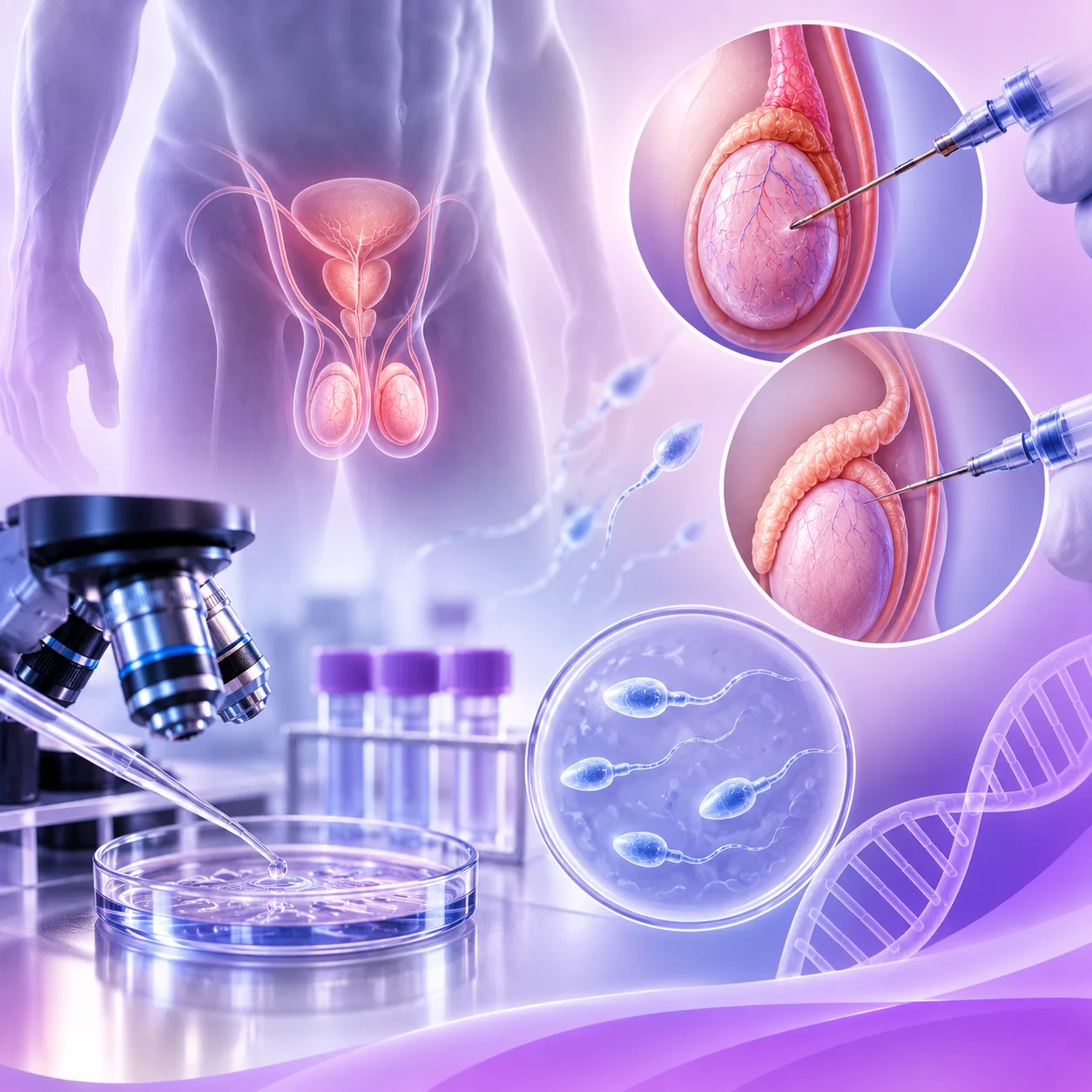
What Are TESA and PESA?
TESA stands for Testicular Sperm Aspiration. A fine needle is used to collect sperm directly from the testicular tissue.
PESA stands for Percutaneous Epididymal Sperm Aspiration. Here, sperm are collected from the epididymis, the small tube attached to the testicle where sperm mature and are stored.
Both are sperm-retrieval procedures rather than treatments that directly correct the underlying cause of male infertility. The retrieved sperm may then be used with ICSI, where a single sperm is injected into a mature egg during IVF.
Who May Need Sperm Retrieval?
The first step is understanding why sperm are absent from the semen. In obstructive azoospermia, the testicles may produce sperm, but a blockage prevents them from reaching the ejaculate. In other cases, called non-obstructive azoospermia, sperm production itself may be low or absent. The right sperm-retrieval method depends on the underlying cause.
Sperm retrieval may be considered when there is:
- No sperm in repeated semen tests.
- A blockage in the reproductive tract.
- Previous vasectomy or reproductive surgery.
- Certain congenital conditions.
- Severe male-factor infertility.
- Difficulty producing a semen sample.
- A need for testicular sperm during IVF/ICSI.
PESA Treatment in Hyderabad
PESA treatment in Hyderabad may be recommended when the testicles are producing sperm, but a blockage prevents them from reaching the semen. During PESA, a fine needle is used to collect sperm from the epididymis.
The procedure is usually performed under local anaesthesia. The collected sample is immediately checked by the embryology team for usable sperm. If enough sperm cannot be obtained, your doctor may recommend another option, such as TESA.
How Is PESA Performed?
The area is cleaned and numbed before the doctor gently inserts a fine needle into the epididymis. A small amount of fluid is collected and examined for sperm. If suitable sperm are found, they can be used for IVF/ICSI or frozen for future treatment.
If enough sperm cannot be obtained through PESA, the doctor may discuss another retrieval technique, such as TESA or another surgical sperm-retrieval method.
TESA Treatment in Hyderabad
TESA treatment in Hyderabad is a simple sperm-retrieval procedure in which sperm are collected directly from the testicle using a fine needle. It may be recommended when sperm cannot be obtained through normal ejaculation or when testicular sperm retrieval is more suitable for the patient’s condition.
The procedure is generally performed using local anaesthesia or another appropriate form of anaesthesia. A needle is introduced into the testicular tissue and a small sample is aspirated. The material is immediately assessed by the embryology team to look for viable sperm.
TESA can be useful in selected cases, but it is not suitable for every form of azoospermia. Men with non-obstructive azoospermia may require a different sperm-retrieval approach and the decision should be made after a detailed male fertility evaluation.
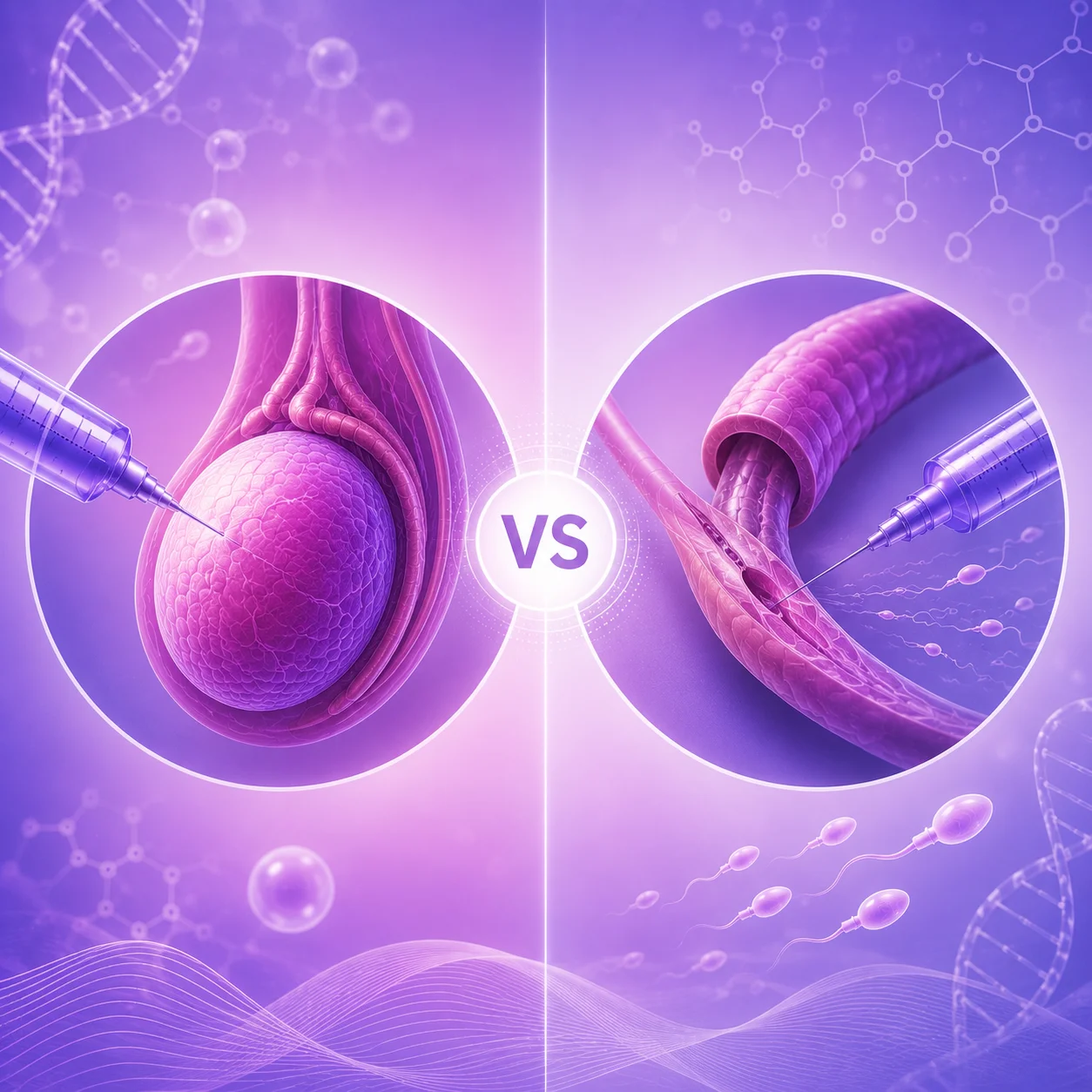
TESA vs PESA: What Is the Difference?
The main difference is where the sperm is collected.
PESA: Sperm is aspirated from the epididymis.
TESA: Sperm is aspirated directly from the testicle.
PESA is often considered when sperm production is adequate but there is an obstruction. TESA may be considered when testicular sperm retrieval is needed.
Neither procedure is automatically “better.” The right choice depends on the cause of azoospermia, the location of the obstruction if present, previous procedures and the planned IVF/ICSI treatment. For obstructive azoospermia, current AUA/ASRM guidance states that sperm can be retrieved from either the testis or epididymis, with the method selected according to the clinical situation.
How Is the Retrieved Sperm Used?
TESA and PESA are usually performed with a clear reproductive plan in mind.
When viable sperm are obtained, they can be used for assisted reproduction, most commonly with ICSI. During ICSI, an embryologist injects a single sperm directly into a mature egg. This can be particularly useful when sperm numbers are very limited because conventional IVF requires sperm to fertilise the egg in the laboratory without direct injection.
The retrieval procedure itself does not guarantee fertilisation or pregnancy. Its purpose is to obtain usable sperm when sperm cannot be obtained adequately through the ejaculate.
Choosing a TESA Center in Hyderabad
When looking for a TESA center in Hyderabad, do not focus only on the procedure price.
Sperm retrieval is closely connected with the embryology laboratory and the planned IVF/ICSI treatment. The medical team should understand the cause of male infertility, while the embryology team needs to assess the retrieved sample promptly.
At Aanvi Fertility and Women’s Centre, patients can discuss their semen reports, previous fertility treatment and available sperm-retrieval options before deciding on the procedure.
The aim is to determine whether TESA, PESA or another approach is appropriate rather than automatically performing the same procedure for every patient.
Finding a TESA Procedure Specialist in Hyderabad
A TESA procedure specialist in Hyderabad should evaluate the reason behind the absent or very low sperm count before recommending sperm retrieval.
When choosing a TESA doctor in Hyderabad, look for a fertility team that evaluates male and female factors together. TESA is often performed as part of an IVF or ICSI treatment plan, so coordination between the doctor and embryology laboratory is important.
A proper assessment may include repeated semen analysis, medical and surgical history, physical examination and, when indicated, hormone or genetic testing. The cause of azoospermia matters because treatment for obstructive azoospermia can be very different from treatment for non-obstructive azoospermia.
At Aanvi Fertility and Women’s Centre, Dr. Swarna is a gynaecologist and obstetrician with an MBBS and Diploma in Obstetrics and Gynaecology, with experience in infertility care. She can evaluate your fertility history and guide you regarding the available assisted-reproduction options. Depending on the diagnosis, the treatment team may recommend sperm retrieval, another male infertility treatment, or a different approach altogether.
Can TESA or PESA Help Men With Azoospermia?
Yes, in selected cases. Azoospermia means that no measurable sperm are found in the ejaculate. It does not automatically mean that no sperm exist anywhere in the reproductive system. The cause may be an obstruction, a hormonal problem, a problem with sperm production, or another condition.
When sperm production is present but sperm cannot reach the semen, retrieval from the epididymis or testicle may provide sperm for IVF/ICSI. When sperm production itself is severely impaired, a different retrieval strategy may be required.
That distinction is why a proper diagnosis should come before choosing TESA or PESA.
Why Consider Aanvi Fertility and Women’s Centre?
Couples dealing with male infertility often focus only on the semen report. But a low or zero sperm count can have several different causes and each may require a different approach.
Aanvi Fertility and Women’s Centre in Tilaknagar, Hyderabad, provides fertility evaluation and treatment planning for both male and female infertility. Patients can discuss sperm-retrieval options, IVF, ICSI and other assisted-reproduction treatments with the fertility team.
The goal is not simply to retrieve sperm. It is to understand the problem, select the appropriate method and coordinate the retrieval with the overall fertility treatment plan.
Frequently Asked Questions
Neither is universally better. PESA is commonly considered when sperm production is present but there is an obstruction, while TESA retrieves sperm directly from the testicle. The appropriate technique depends on the cause of infertility and the treatment plan.
TESA is generally performed with anaesthesia to reduce discomfort. Some soreness or swelling can occur afterward. Your doctor will explain the expected recovery and pain-management plan before the procedure.
Yes. Retrieved sperm can be used with ICSI when viable sperm are available. ICSI allows an embryologist to inject an individual sperm directly into a mature egg.
Both are generally minimally invasive procedures and many patients can go home the same day. Your exact recovery time depends on the procedure, anaesthesia and individual circumstances.
Take the Next Step With a Male Fertility Evaluation
A diagnosis of low sperm count or azoospermia does not automatically mean that biological fatherhood is impossible. In selected cases, sperm can be retrieved directly from the reproductive tract and used with IVF and ICSI.
If you are considering TESA treatment or PESA treatment in Hyderabad, start with a proper evaluation rather than choosing a procedure based only on price.
Aanvi Fertility and Women’s Centre can help you understand the cause of your male fertility problem and discuss whether sperm retrieval is appropriate for you.
Book an appointment at Aanvi Fertility and Women’s Centre, Tilaknagar, Hyderabad and discuss your options with our fertility team.